
You need clear plans and reliable forecasts to make better choices and avoid costly surprises. We will show you simple methods to turn past data into confident short- and long-term plans that keep your goals on track.

Start by learning the core ideas and easy steps that link planning to forecasting. We keep explanations short and practical so you can apply them to budgets, projects, or growth targets without getting lost in jargon.
Key Takeaways
- We explain the main ideas so you can use them right away.
- We give a step-by-step approach to build plans from data.
- We highlight how these tools help guide decisions and adapt to change.
Core Concepts of Planning and Forecasting
We focus on clear goals, reliable data, and practical steps that guide decisions and resource choices. Good planning sets targets and actions; accurate forecasting predicts likely outcomes so we can adjust plans as facts change.
What Is Planning?
Planning is the process we use to set goals and decide how to reach them.
We define measurable targets (sales, headcount, production) and assign owners, timelines, and budgets. Plans break long‑term strategy into short‑term actions, such as quarterly sales targets and monthly hiring steps.
A typical planning process includes:
- Setting objectives linked to strategy.
- Identifying required resources and constraints.
- Detailing tasks, owners, and deadlines.
- Building a budget and milestones.
Planning drives decision‑making by making tradeoffs explicit. It tells us what we intend to do, who will do it, and how we will measure success.
What Is Forecasting?
Forecasting is how we predict future results using data and assumptions.
We pull historical performance, market trends, and current signals to estimate outcomes like revenue, demand, or cash flow. Forecasts can be statistical (time series) or judgmental (expert adjustments).
Key elements of forecasting:
- Data collection and cleansing.
- Choosing a forecasting method.
- Testing accuracy with back‑testing or error metrics.
- Updating forecasts as new data arrives.
Forecasting informs decisions by showing likely ranges of outcomes. It reduces uncertainty, helping us plan inventory, staffing, and capital needs with better confidence.
Key Differences Between Planning and Forecasting
Planning states what we intend to achieve; forecasting shows what will likely happen.
Plans are normative — they reflect our goals and chosen actions. Forecasts are predictive — they reflect expected outcomes given current trends.
Other important contrasts:
- Timeframe: Plans often span years with tactical breakdowns; forecasts update continuously for months to quarters.
- Basis: Plans use strategic choices and targets; forecasts use data and probability.
- Purpose: Plans allocate resources to reach goals; forecasts guide risk management and contingency actions.
We must keep both linked. When forecasts deviate from plans, we adjust budgets, tasks, or timelines to stay aligned with goals or revise goals when reality changes.
How Planning and Forecasting Work Together
We use forecasts to test and refine plans continuously.
Before finalizing a plan, we run forecasts to see if goals are achievable under current trends. If forecasts show shortfalls, we change assumptions, reallocate resources, or set different targets.
Practical steps to integrate them:
- Use the forecast as an input to budget and staffing decisions.
- Run scenario models (best, base, worst) to see plan sensitivity.
- Update plans after each forecast cycle and record the reason for changes.
- Track variance: compare forecasted vs. actual and adjust both models and actions.
This cooperation improves decision‑making, tightens goal setting, and keeps management focused on realistic, data‑driven actions.
Processes and Methodologies
We focus on clear steps, data use, and decisions that turn analysis into action. Our aim is to link planning with forecasting so teams set realistic targets and adjust quickly when conditions change.
The Planning Process
We start by defining objectives tied to revenue, cost, and capacity. We list assumptions like market growth rates and key product launches, then assign owners for each line item.
We use a simple template that captures targets, timelines, and resources so every manager knows their deliverables. This creates an actionable plan with checkpoints for monthly reviews.
We gather historical data to set baselines and calculate trends. We hold a planning workshop with finance, sales, and operations to reconcile top-down goals with bottom-up inputs.
We document decisions and contingency triggers, such as when to cut spend or hire. This keeps the plan practical and aligned with our strategic aims.
Forecasting Process and Techniques
We choose techniques based on horizon and data quality. For short-term operational needs we favor time series models like moving averages or exponential smoothing because they react to recent patterns. For longer-term or new-product forecasts we use regression and scenario analysis to include market drivers.
We combine quantitative methods with expert judgment from sales and product teams to catch changes not in the data. We validate models by back-testing against historical data and track forecast error metrics, such as MAPE or RMSE, to measure accuracy.
We update forecasts monthly or when key indicators change. This lets us convert forecasts into cash forecasts and inventory plans quickly.
Integrating Planning and Forecasting
We align planning cycles so forecasts feed budgets and budgets inform resource allocation. We make forecasting the input to the planning process: revenue and demand forecasts populate the budget and hiring plan.
We set up a single data repository for historical data, assumptions, and model outputs. This reduces version control issues and speeds reconciliation between teams.
We create clear handoffs: forecasts go to finance for budget creation, and planners return revised targets after capacity checks. We schedule joint review meetings to resolve gaps and agree on action items.
We automate routine data pulls and model runs where possible to free analysts for interpretation and decision support.
Common Challenges and Best Practices
We often see poor data quality and unclear ownership as top obstacles. We fix this by naming data stewards and cleaning key fields such as sales by SKU and lead times. This improves model inputs and forecast reliability.
We also face bias in expert judgment. We limit bias with structured elicitation, anonymous estimates, and by combining judgment with model outputs.
We recommend frequent small updates over infrequent big revisions. We keep a log of forecast changes and reasons to learn from past errors.
We document assumptions, measure forecast accuracy, and tie review outcomes to concrete decisions like adjusting production or marketing spend. This keeps forecasting practical and tied to business actions.
Applications in Business and Finance
We use planning and forecasting to set clear financial goals, align budgets with expected sales, and keep inventory at the right levels. These practices help us balance short-term cash needs with long-term strategic objectives.
Financial Planning and Analysis
We build financial planning and analysis (FP&A) models to translate strategy into numbers. We forecast revenue by product line and region, then map those figures to expense drivers like headcount and marketing spend. This lets us test financial objectives under different scenarios.
We monitor key metrics such as gross margin, operating cash flow, and burn rate. Regular variance analysis shows where actuals deviate from forecasts so we can adjust forecasts or control costs. We also prepare rolling forecasts to keep plans current as new sales and market data arrive.
We use visualization and dashboards to share insights with executives. Clear charts help the leadership team decide on capital allocation, hiring, or pricing moves. Linking our FP&A work to strategic planning keeps finance focused on outcomes, not just numbers.
Budgeting and Forecasting
We create annual budgets tied to strategic priorities and update forecasts monthly or quarterly. Budgets set the financial targets for departments, while forecasts adjust those targets based on real sales performance and market signals such as seasonality or customer churn.
We reconcile top-down targets with bottoms-up inputs from sales, operations, and product teams. This alignment improves ownership and makes forecasts more reliable. We maintain version control and use scenario analysis to model upside and downside cases.
We integrate sales forecasts with revenue recognition rules to improve cash projections. That helps us manage working capital and plan for capital expenditures. Regular forecast cadence reduces surprise variance and improves our ability to hit financial goals.
Supply Chain and Inventory Planning
We align supply chain planning with demand forecasts to reduce stockouts and excess inventory. We use sales forecast accuracy, lead times, and safety stock formulas to set reorder points and lot sizes. That lowers carrying costs and keeps service levels high.
We optimize procurement schedules and production runs to match expected demand. When forecasts shift, we reroute orders or adjust production to avoid rush fees and expedite costs. We track inventory turnover, days of inventory outstanding, and fill rates to measure performance.
We also model supplier risk and transit variability into our forecasts. This helps us balance cost and resilience. Tight integration between inventory planning and budgeting ensures procurement spend fits within financial objectives.
Strategic and Operational Planning
We link strategic planning to operational plans by translating multi-year goals into annual targets and quarterly milestones. Strategic planning defines the financial objectives; operational planning assigns budgets, staffing, and schedules to reach them.
We prioritize investments by running NPV and payback analyses on proposed projects. Then we fold approved projects into capital budgets and resource plans. Operational planning focuses on execution — staffing schedules, product roadmaps, and campaign timelines — so forecasts become achievable actions.
We hold regular planning reviews to reallocate resources when performance deviates. This keeps our strategy adaptable and ensures operational work directly supports the financial planning and analysis outputs we report to stakeholders.
Importance, Impact, and Future Trends
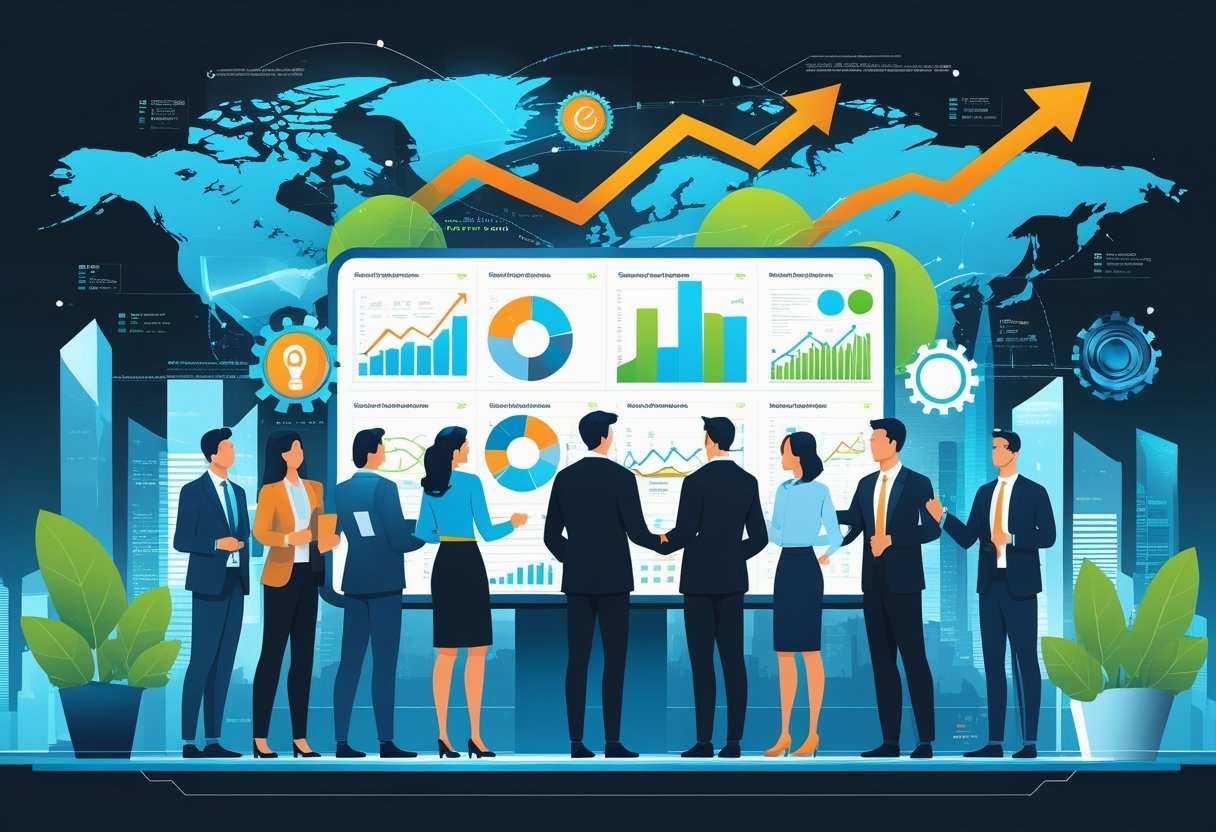
We focus on practical value: how forecasting informs decisions, protects cash flow, and guides investments. Our work ties forecasts to measurable risks, market signals, and the tech that will change planning.
Role in Decision Making and Risk Management
We use forecasting to turn data into actionable choices. By modeling demand, we set production levels, staff plans, and inventory targets. That reduces stockouts and excess holding costs.
We quantify risk with scenario ranges and probability bands. Stress tests show how revenue and margins change under shocks like supply delays or sudden demand drops. This lets us set contingency budgets and trigger points for hiring or capital spending.
We combine qualitative intelligence—competitor moves, regulatory changes—with quantitative models. This mix improves accuracy when historical data alone misses shifts. We track model drift and update assumptions monthly to keep decisions aligned with reality.
Benefits for Financial Stability
We tie forecasts directly to cash flow, debt covenants, and working capital needs. Accurate revenue and expense projections let us plan loan draws, repayments, and capital raises with less cost.
Forecasting helps set realistic budgets and KPI targets. We use rolling forecasts to adjust assumptions each quarter, which smooths earnings volatility and supports credit ratings. That reduces emergency borrowing and preserves liquidity.
We also use forecasts to optimize pricing and promotions. Small price or volume errors compound over time; the right forecast lowers forecast error, improving gross margin and free cash flow predictability.
Market Trends and Scenario Planning
We watch demand signals, competitor pricing, and macro indicators to spot trend shifts early. We map scenarios from mild demand growth to severe recession and assign likelihoods based on leading indicators like order books and consumer sentiment.
Scenario planning forces cross-functional teams to test responses—supply chain rerouting, price cuts, or marketing shifts. We document trigger conditions and action lists so teams move fast when a scenario unfolds.
We refresh scenarios every quarter and after major events. This keeps our market analysis current and reduces reaction lag. The result: faster, more coherent responses that protect revenue and market share.
Emerging Technologies and Future Trends
We adopt automation and machine learning to improve forecast accuracy and speed. ML models detect non-linear patterns in sales and external data like web traffic or weather. That helps where past data alone fails.
We integrate real-time market feeds and ERP data for near-instant updates. This supports continuous forecasting and quicker decision loops across procurement and finance.
We also test generative tools for scenario narrative and sensitivity analysis. They speed report writing and surface assumptions, but we keep human review for judgment on rare events and strategy shifts.
For risk management, we pair tech with governance: model validation, bias checks, and change logs. That maintains trust in forecasts as tools for planning and capital allocation.

No comments:
Post a Comment