
You watched a store close while a new way to watch movies grew on your screen. Blockbuster stuck to stores and late fees as people moved toward online rentals and streaming, which made visits, returns, and surprise charges more painful for your schedule and wallet. If you want to know how solving the right customer problem early turned a niche DVD startup into a streaming giant, this case shows it.

You saw the effects everywhere: empty aisles, frustrated customers, worried staff, and investors pushing for fixes. Netflix’s team focused on the real pain points, killed late fees, built streaming tech, and used data to make choices that fit your tastes — and that shift forced an industry change from physical rentals to digital convenience.
Key Takeaways
- Focus on customer pain points to avoid being disrupted.
- Shifting to digital and using data drives lasting growth.
- Failure to adapt can turn market leaders into case studies.
Key Differences Between Netflix and Blockbuster
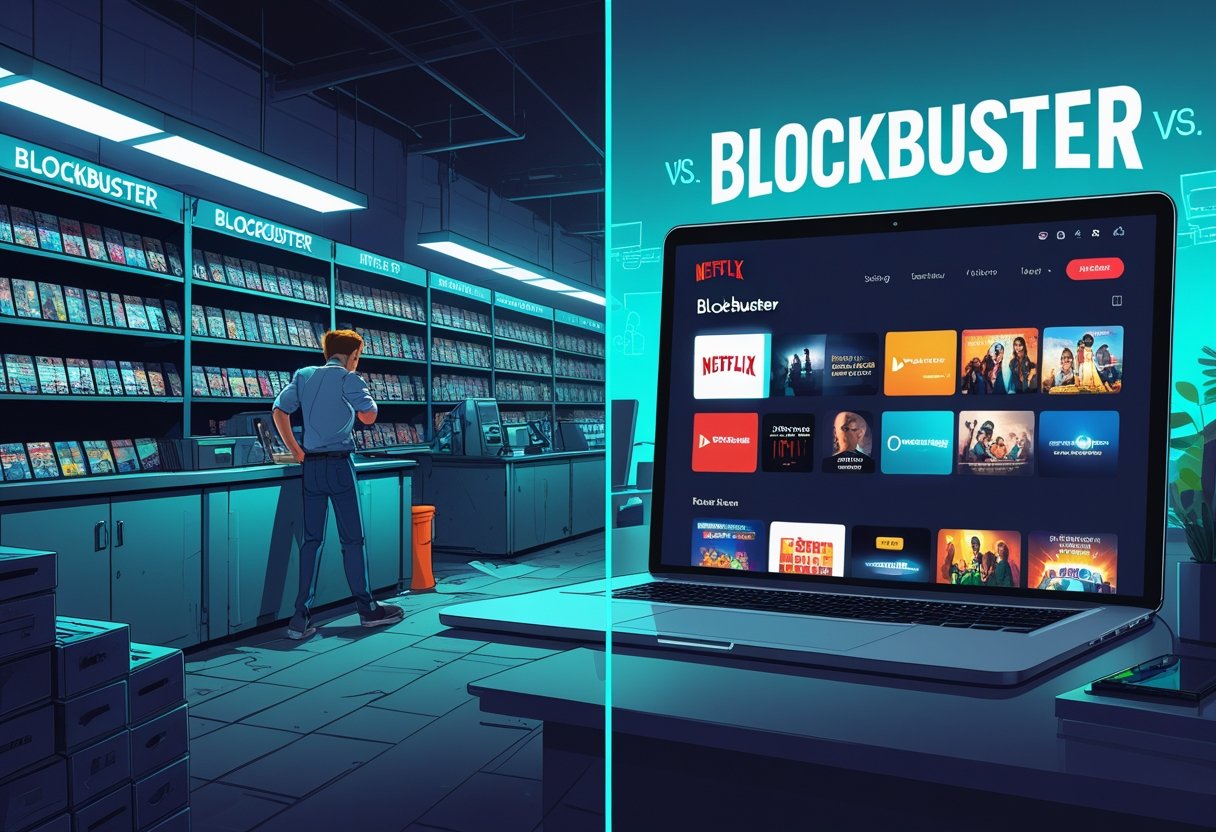
Netflix built a digital, subscription-first service that removed customer pain points. Blockbuster kept a store-focused, per-rental model that relied on late fees and foot traffic.
Business Models Compared
Netflix moved from DVD-by-mail to a subscription-based model that lets you pay one monthly fee for unlimited access to video rentals and streaming. That shift changed revenue from one-off rentals to recurring income and made forecasting easier. Netflix also invested in technology and licensing to scale streaming globally.
Blockbuster kept a brick-and-mortar retail model centered on in-store DVD rental sales and concessions. You paid per rental, which meant revenue depended on store visits and new inventory turnover. That model worked when customers wanted immediate physical access, but it could not scale like a digital service.
You can see how these two business models led to different investments. Netflix prioritized servers, codecs, and recommendation algorithms. Blockbuster prioritized store locations, inventory logistics, and staffing.
Customer Experience and Convenience
With Netflix, you could skip the trip to a store, get DVDs by mail, then stream on demand from your home. That reduced friction for you: no returns, no travel, and growing personalization through data-driven recommendations. Netflix made convenience a core part of the product.
Blockbuster made in-person browsing and immediate pickup the norm. That appealed when people valued seeing titles on the shelf. But you had to travel, pick up, and return DVDs on time. As home internet speeds and smartphones improved, Blockbuster’s in-store experience felt slower and less flexible for you.
The convenience gap mattered because it changed how often you used the service and how loyal you stayed over time.
Role of Late Fees and Subscription Models
Blockbuster relied heavily on late fees as a revenue stream. Late fees increased short-term income but also created clear customer pain. You faced fines for missed returns, which drove complaints and damaged trust. Blockbuster later tried removing fees, but the move came after years of customer frustration and financial strain.
Netflix eliminated late fees from the start in its DVD-by-mail service and later used a monthly subscription to bundle value. That approach aligned incentives: Netflix earned from keeping subscribers satisfied rather than penalizing them. The monthly subscription also funded investments in streaming rights and original content that further tied you to the platform.
When you compare the two, the late-fee model generated immediate cash but hurt the relationship with customers, while the subscription model built predictable revenue and long-term customer value.
Stages and Impact of Blockbuster’s Decline
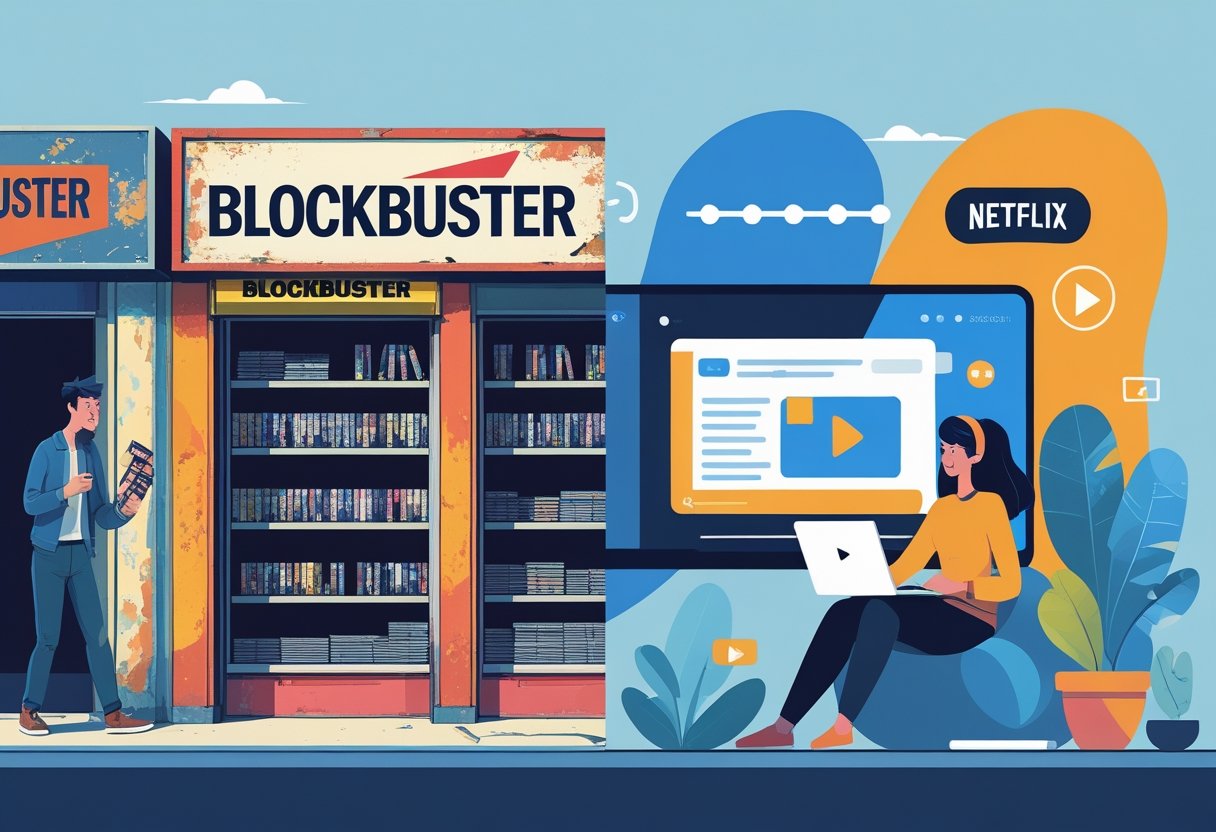
Blockbuster's fall followed clear steps: fewer customers visited stores, loyalty slipped as people chose easier options, and revenue dropped fast. These shifts hurt employees, investors, and leaders who faced hard choices as debts mounted.
Declining Store Traffic
You watched foot traffic shrink in Blockbuster stores as more people tried mail rentals and streaming. The chains once relied on weekend crowds; by the 2000s those visits dropped steadily. Fewer walk-ins meant empty shelves and less impulse spending on concessions and late-fee revenue.
Store counts stayed high while customer visits fell, which increased fixed costs per sale. That mismatch put pressure on local managers trying to hit sales targets with fewer customers. Reduced traffic also made store locations seem less valuable to investors evaluating the company’s future.
Customer Loyalty Erosion
You saw loyal customers shift when Blockbuster kept late fees and a less convenient model. Netflix’s subscription and mail model removed hassles and created predictable billing. Customers who valued convenience began to view Blockbuster as outdated.
When Blockbuster finally cut late fees in 2005, many customers had already left. Personalization and recommendation systems at Netflix further weakened loyalty by making discovery easier. Losing repeat renters accelerated the revenue slide and made marketing more expensive for Blockbuster.
Revenue and Financial Strain
Your company’s revenue fell as rentals declined and operating costs stayed high. Blockbuster’s large debt from store expansion left little room for tech investment. Revenue decline reduced cash flow, limiting options for new digital services or content licensing.
Investors grew concerned as quarterly earnings missed expectations. The leadership, including CEO John Antioco at the time, faced pressure to pivot while servicing debt. This financial strain helped push Blockbuster toward bankruptcy protection in 2010 when restructuring could no longer cover obligations.
Stakeholder and Employee Effects
You had to manage the fallout across many groups. Store employees faced reduced hours, store closures, and layoffs as traffic and sales dropped. Local managers lost commissions and sometimes entire store budgets.
Investors saw share value fall and debated management decisions. Leadership had to answer tough questions about missed opportunities to buy or emulate Netflix. Creditors and investors pressured the board during the run-up to bankruptcy, while executives weighed cost cuts versus digital investment.
Netflix’s Path to Industry Leadership
Netflix restructured its business to remove customer friction, invest in new delivery tech, and use data to guide content choices and global growth. Leadership choices and steady tech bets turned a DVD mailing startup into a global streaming platform.
Identifying and Solving Customer Pain Points
You saw Netflix start by fixing clear, everyday problems: late fees, store trips, and limited selection. Reed Hastings and Marc Randolph moved from per-rental pricing to a flat monthly subscription. That change removed late fees and made viewing predictable for customers.
You also benefited from simple service design: an easy website, mailed DVDs with no return rush, and later a one-click play for streaming. Leadership focused on convenience as a competitive edge. That focus forced Blockbuster to react rather than lead, exposing the limits of a store-based model.
Embracing Streaming Technology
You watched Netflix shift capital from physical logistics to servers, broadband delivery, and licensing deals. Leadership invested early in streaming infrastructure and content delivery networks to handle peak traffic and reduce buffering. This technical shift converted product strategy into daily user experience.
You saw that streaming required new rights deals and engineering: adaptive bitrate streaming, device apps, and scalable cloud systems. Those investments let Netflix expand globally faster than store networks could. The move from DVD to a streaming service defined the company as a digital streaming leader.
Leveraging Data and Personalization
You gained a more relevant service because Netflix used data to learn viewing habits. Technology & data teams built recommendation algorithms that suggested shows you would likely watch next. Personalization cut search time and kept subscribers engaged.
You benefited from A/B tests, viewing analytics, and algorithm-driven homepages. Leadership treated data as a product input, not just reporting. That allowed content acquisition and promotion to focus on shows with high engagement, improving retention and informing original content decisions.
Investment in Original Content
You saw Netflix move from licensing to producing shows like House of Cards and Stranger Things. Leadership believed owning content would reduce dependency on third-party catalogs. Original content also created global hits that drove subscriptions and brand identity.
You experienced more diverse offerings as Netflix scaled content production and local-language projects worldwide. Data analytics guided greenlighting decisions, helping choose projects likely to succeed. New content strategies turned Netflix into a global entertainment platform that competes on both technology and storytelling.
Lessons in Adaptability and Innovation
You should focus on clear signals that show why companies win or lose: decisions about business model, tech investment, and customer convenience shape market outcomes. The next parts explain specific mistakes, how modern disruptors act, and practical takeaways for entertainment firms.
Strategic Missteps and Defensive Mindsets
Blockbuster trusted its store network and late-fee revenue instead of testing new models. That choice ignored rising online rental demand and the DVD-by-mail trend. You see this as a failure to prioritize customer convenience over short-term profits.
Leaders also showed a defensive mindset. They treated Netflix as a niche threat instead of a strategic challenge. You should note how missed partnerships and slow digital investment cut Blockbuster off from competitive advantage.
When you evaluate firms, watch for signs of complacency: declining store traffic, shrinking market share, and refusal to move resources into technology. These are early warnings that technological disruption is likely to hurt the business.
Modern Disruptors in Business
Disruptors like Netflix, Amazon, and Uber change industries by using tech to remove friction. Netflix used streaming and data to make discovery and delivery fast. Amazon extended this model across retail and media, while Uber remade transport with a digital platform.
You should pay attention to three patterns: move-first product launches, heavy tech and data investment, and relentless focus on user convenience. These build durable competition that is hard to dislodge with legacy assets alone.
Disruption often starts in a small segment—DVD-by-mail or on-demand rides—and then scales. If you run a business, test new channels early and measure adoption. That gives you a chance to pivot before competitors lock in customers.
Takeaways for the Entertainment Industry
You must invest in streaming infrastructure, personalization, and user experience to stay relevant. Use data teams to recommend shows, reduce friction in sign-up, and remove costly policies like late fees that hurt convenience.
Consider partnerships early. Blockbuster declined offers that could have merged its physical reach with Netflix’s online model. You should weigh alliances that accelerate digital transition rather than defend obsolete models.
Finally, treat technological innovation as ongoing. The digital landscape shifts fast; platforms, content delivery, and discovery matter equally. If you aim to keep a competitive advantage in entertainment, act on metrics, fund experiments, and make customer convenience a core strategy.

No comments:
Post a Comment