
Imagine a chokepoint that can slow the world economy and strangle a nation’s energy lifeline. China is building massive alternatives to the Mollag Sea Pass because it cannot afford to let a single narrow waterway threaten its imports, industry, and national security. You should care because these projects will reshape trade routes, shift power balances, and affect prices and politics across continents.

You will follow China as it spends on new ports, overland corridors, and long-range shipping options to cut reliance on a single passage. The move seeks not to pick a fight over the Mollag, but to make that chokehold irrelevant — and that shift could change how navies, traders, and governments plan for the next decade.
Key Takeways
- China is reducing its exposure to a critical maritime chokepoint.
- New infrastructure aims to reroute trade and secure energy flows.
- These projects carry wide geopolitical, economic, and local impacts.
The Mollag Sea Pass: Global Trade Chokepoint
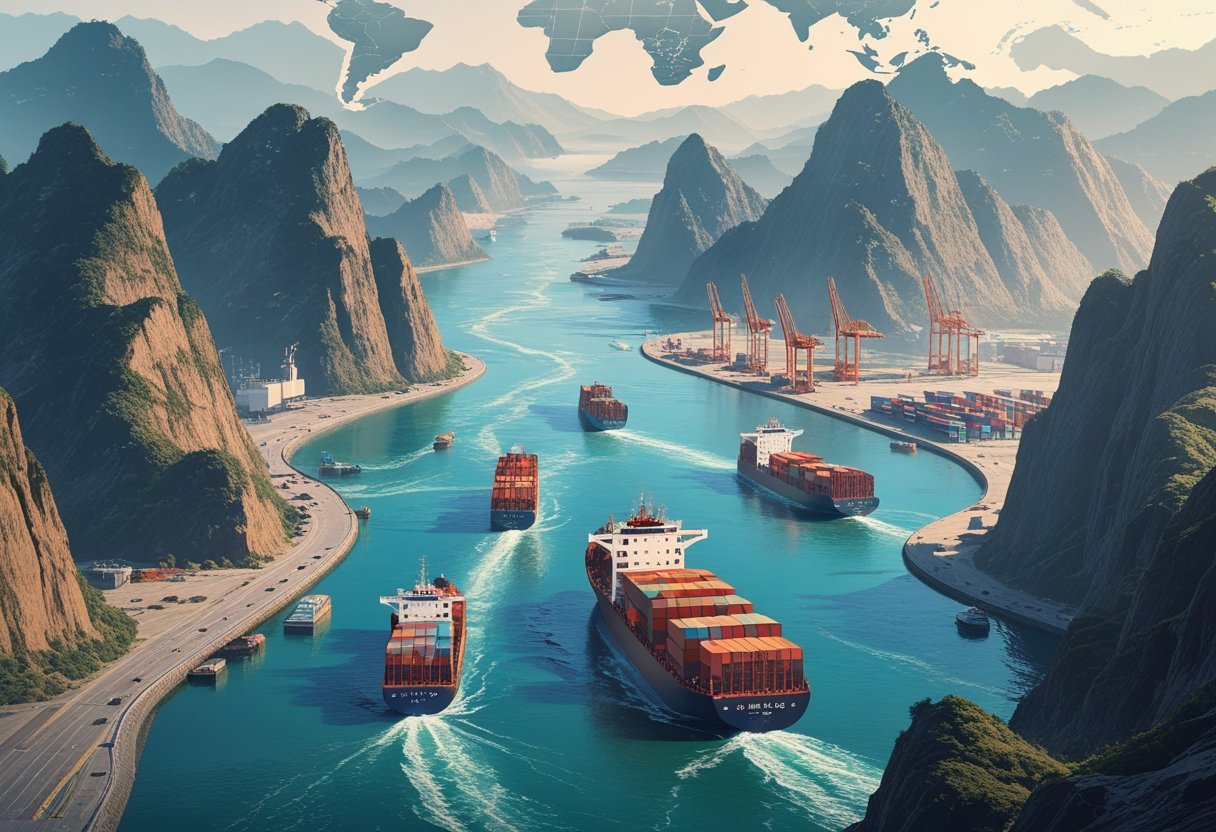
This narrow corridor handles huge volumes of cargo and oil that keep Asian factories and cities running. You should know how trade, energy flows, and military risks all concentrate here and why that matters for China and its neighbors.
Economic Significance to China and Asia
You rely on goods that move through the Mollag Sea Pass—finished electronics, parts, and raw materials. Major container routes from Southeast Asia and the Middle East funnel through the pass, making it a shortcut that cuts weeks off voyages compared with long detours. That saves shipping time and lowers costs for businesses across China, Japan, and South Korea.
Ports and logistics hubs on either end see heavy traffic. When ships stack up, you face higher freight rates, delayed deliveries, and tighter inventories. Industries that need just-in-time parts, like auto and electronics, are most exposed. The pass also supports fisheries and regional trade that feed coastal economies.
Dependence on Maritime Oil Imports
A large share of China’s imported oil transits the Mollag Sea Pass before reaching refinery hubs on the eastern seaboard. You depend on steady tanker flows to fuel power plants, transport fleets, and industry. Any sustained blockage forces tankers to detour around longer routes, raising fuel costs and delivery times.
Higher shipping distances increase insurance and bunker fuel bills. Those added costs quickly pass to consumers and manufacturers. Energy stockpiles can reduce short-term shocks, but your refineries and transport networks remain tied to continuous shipments. That makes secure sea lanes vital to energy security and economic stability.
Geostrategic Control and Vulnerabilities
Because so much trade and oil runs through one narrow waterway, control of the Mollag Sea Pass gives strategic leverage. You must account for naval patrols, alliance postures, and the risk of targeted disruption in times of tension. A blockade or sustained threat can choke supply lines and force rapid rerouting.
Rerouting adds distance and carbon emissions and strains global shipping capacity. Coastal states and navies invest in surveillance, escorts, and port resilience to reduce risk. China’s infrastructure plans aim to lower dependence on this chokepoint by creating alternative routes, but those projects take time and money to match the scale of oil and container flows now passing through the Mollag Sea Pass.
China’s Vulnerability: The Mollag Dilemma
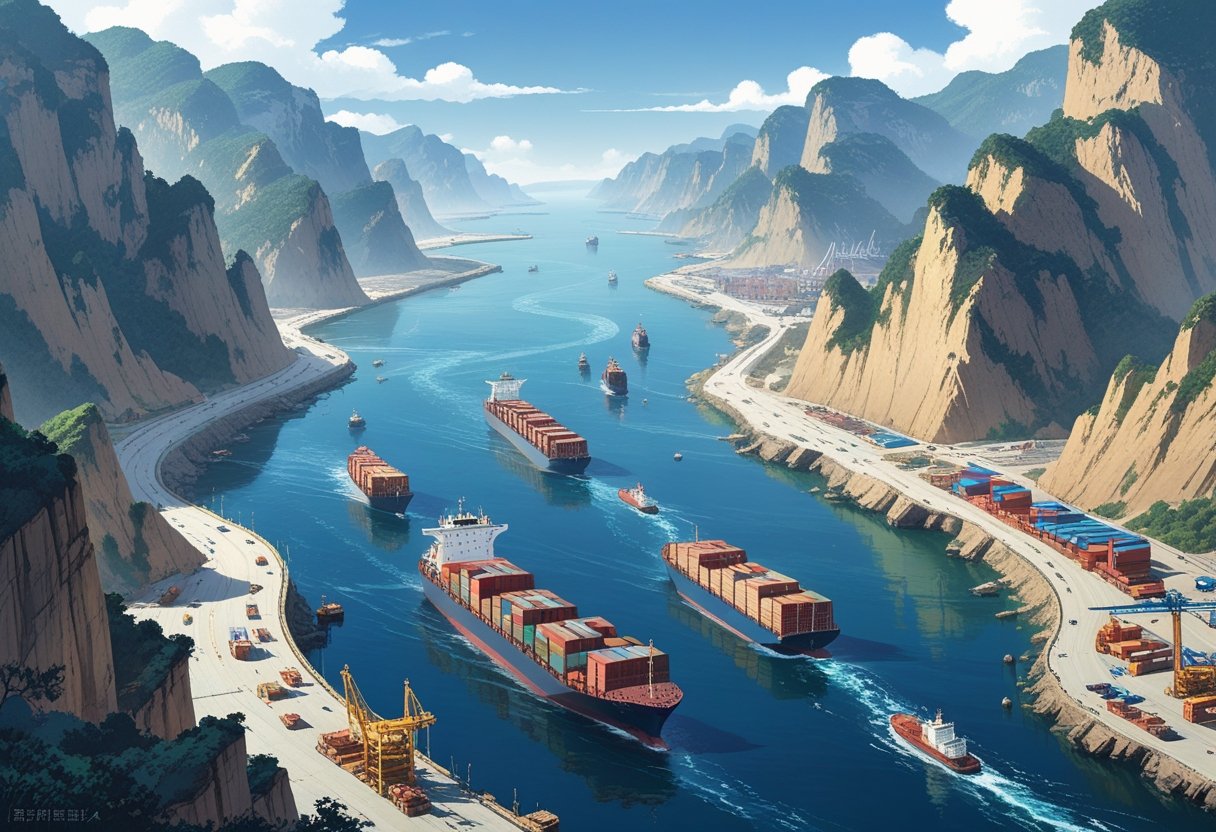
China relies on a single narrow sea route for most of its oil and much of its trade, creating a clear strategic weak point. That dependence ties energy flows, industry output, and national planning to a place you cannot easily control.
Strategic Risks for Chinese Energy Security
If the Mollag Pass closes, your oil tankers face long detours or delays that raise fuel costs and strain refineries. About half to two-thirds of China’s seaborne crude moves through that corridor in many analyses, so short interruptions can quickly shrink available imports.
A blockade or local fighting could force you to tap strategic reserves and slow industrial activity. Military threat or sanctions that target shipping routes would push China to accelerate pipelines, overland corridors, and northern sea lanes to reduce exposure. Those projects aim to lower risk but take years and big investments to match the Pass’s capacity.
Water scarcity ties in because some bypass routes and inland terminals need large amounts of water for refining and transport hubs. That means energy security plans must account for both fuel flows and access to fresh water where facilities sit.
Impact on National Development and Industry
When oil supply tightens or becomes pricier, your factories and power plants face higher costs and possible fuel rationing. Export-focused manufacturers feel this quickly; rising transport and energy bills cut profit margins and can slow production lines.
Regional development projects linked to bypass routes create jobs and infrastructure, but they also shift investment away from coastal logistics. That affects ports, shipping services, and cities built around the existing maritime economy. Leaders such as Premier Li Qiang have pushed faster construction and policy support for overland corridors to protect growth and jobs.
You should expect uneven effects: inland provinces gain new projects and water-dependent industries may struggle, while coastal hubs adapt to changing shipping patterns.
Escaping the Chokepoint: China’s Strategic Alternatives
China reduces risk by building routes on land, sea, and at home. You will see how new rail and pipeline corridors, Arctic and overland options, and shifts to domestic power reshape China’s exposure to a single chokepoint.
Land-Based Trade and Energy Corridors
China expands rail links and pipelines to move goods and oil without the narrow sea lane. Rail freight corridors from western China through Central Asia to Europe cut sea transit times for containers and reduce reliance on ships passing the Mollag Pass. You should note the China–Pakistan Economic Corridor (CPEC) and new pipelines to Xinjiang as practical examples that shorten transit and diversify routes.
Pipelines moving crude and refined fuels from Central Asia and Russia supply refineries inland. These lines lower the share of oil that must travel by sea and give you an inland buffer in crises. Construction partners, financing, and security arrangements matter here, and Beijing uses state banks and firms to drive projects you can track by port upgrades, rail terminals, and pipeline maps.
Development of Northern and Overland Routes
China invests in northern sea lanes and overland rail that bypass the choke point entirely. The opening of seasonal Arctic passages shortens voyages from Europe and northern ports; Chinese shipping firms increasingly test these routes in summer months. Overland Eurasian rail links—faster than sea for some manufactured goods—also provide steady capacity you can plan around.
Beijing pairs route development with diplomatic hubs, port investments, and logistics centers across Russia, Kazakhstan, and Pakistan. You should watch joint ventures and long-term leases, because they lock in practical access. Chinese Premier Li Qiang has publicly backed infrastructure diplomacy and financing that accelerate these projects and tie them into national strategic planning.
Investment in Domestic Renewable Energy
China cuts oil dependency by scaling renewables and hydropower at home. Large hydropower dams and grid upgrades in southwestern provinces reduce fuel needs for industry and cities you depend on for supply chains. The country also pours money into wind, solar, and battery storage to shrink imports of fossil fuels.
Investments in domestic energy change how vulnerable your supply chain is to a seaborne blockade. If factories and ports draw more power from local renewables and hydropower, China can sustain industrial output with less imported oil. State-led financing and targets championed by senior leaders push utilities and manufacturers to adopt these alternatives quickly.
Hydropower Megaprojects: The Project of the Century
This project aims to tap one of the largest untapped energy rivers on Earth. It plans huge engineering works, far greater power output than existing Chinese dams, and major geopolitical and environmental consequences.
Yarlung Tsangpo and Five Cascade Hydropower Stations
The Yarlung Tsangpo (which becomes the Brahmaputra downstream) runs through a deep canyon with steep drops that give it exceptional hydropower potential. Planners target the river’s Great Bend in Tibet to place a series of linked plants. You should know the plan calls for five cascade hydropower stations placed along the stretch to capture the river’s kinetic energy in stages rather than one single reservoir.
That cascade layout reduces the need for a single massive reservoir but requires long tunnels and multiple diversion works. Construction will push tunnel-boring, concrete, and seismic engineering in an area with high earthquake risk. Local impacts include altered flow patterns, sediment trapping, and potential displacement of communities in Tibet.
Surpassing the Three Gorges Dam
Engineers designed the scheme to produce far more power than the Three Gorges Dam. Estimates presented by Chinese officials put total annual generation near 300 billion kilowatt-hours (300 billion kWh), roughly triple the output of Three Gorges. If achieved, this would make it the largest hydropower complex by annual energy produced.
You should note capacity comparisons often mix peak capacity (GW) and annual energy (kWh). The project emphasizes annual output to highlight long-term energy supply. Achieving those figures depends on river flow, tunnel efficiency, and long-term sediment control—factors that proved challenging even for Three Gorges during its planning and early operation.
Kinetic and Economic Potential
The river’s steep gradient gives high kinetic energy per unit of water. Capturing that energy across multiple stations increases conversion efficiency and allows staged release for grid management. This design supports large-scale power transfer to China’s industrial east, fitting the government’s plan to move western power eastward.
Economically, the project is framed as a stimulus: massive construction spending, jobs, and demand for cement and steel. You should also weigh costs: huge capital outlay, complex maintenance in a seismic zone, and long-term ecological services lost when flows change. Downstream nations like India and Bangladesh will watch river discharge and sediment changes closely because those affect agriculture and flood patterns.
Geopolitical Impacts and Regional Tensions
China’s bypass projects reshape trade flows, water use, and security ties across South Asia. These moves affect India’s border regions, Bangladesh’s river systems, and downstream water supplies tied to the Brahmaputra and Jamuna.
Implications for India, Bangladesh, and Arunachal Pradesh
You will see India reassess strategy where infrastructure and rivers meet borders. China’s overland routes reduce Beijing’s reliance on sea lanes, which weakens India’s leverage at sea but raises tensions along the land frontier, especially in Arunachal Pradesh. New rail and road links across Tibet increase Chinese logistic reach near India’s northeastern states.
Bangladesh faces mixed effects. Shifted Chinese trade corridors can bring investment and port competition, but also push transit routes that bypass Bangladeshi ports. That may reduce port revenues while increasing political pressure to accept new transit deals.
In Arunachal Pradesh, you should expect upgraded Indian military posture and faster road and airbase development. Border incidents could rise if infrastructure outpaces diplomatic mechanisms. Decision-makers on both sides will judge actions by immediate security returns, not long-term stability.
Water Scarcity and Downstream Effects
Your water security will be affected where China controls headwaters. The Brahmaputra originates in Tibet; changes to flows influence the Jamuna in Bangladesh and water availability in Assam and Arunachal Pradesh. Large infrastructure like reservoirs or diversion projects upstream can alter seasonal floods and dry-season flows.
For farmers in Assam and Bangladesh, altered timing of flows means lost crops, higher irrigation needs, and greater flood risk in some years. Urban water supplies in the lower basin may face shortages during dry seasons. You should watch Chinese hydropower and reservoir plans closely, since they determine downstream release patterns and emergency management during droughts.
Bilateral Relations and Regional Security
You will find bilateral ties become more transactional and securitized. India will deepen ties with partners that offer naval presence and intelligence sharing to reassure maritime access that China’s bypasses weaken. Bangladesh may balance economic offers from China against security ties with India, leading to fragile hedging.
Security incidents at sea or on land will prompt military drills and closer defense coordination among India, Japan, Australia, and the U.S. Diplomatic channels will face pressure to manage river disputes and border incidents without escalation. Expect more bilateral agreements on data-sharing for floods and navigation, plus contested rhetoric over development projects and their strategic intent.
Relevant reporting highlights broader trade and security trends shaping these choices, including shifts in Asia-Pacific maritime routes and regional alliances. (See analysis on regional trade impacts in the East China Sea and broader maritime shifts here: https://strategyinternational.org/2024/11/05/publication146/.)
Environmental and Sociopolitical Considerations
You will face trade-offs between energy security, coastal and river ecosystems, and the lives of people who depend on local fisheries, farms, and pilgrimage routes. Expect impacts on coral reefs, migratory fish, and freshwater systems tied to projects that reroute shipping or build ports and canals.
Ecological Risks and Biodiversity
Large-scale dredging, land reclamation, and new shipping routes can destroy coral reefs and seagrass beds that support fish nurseries. These habitats often host rare species and sustain local fisheries. Sediment plumes from dredging will smother benthic life for years and reduce water clarity, harming photosynthetic organisms.
In regions connected to the Mollag corridor, altered currents can change sediment delivery to coasts and river mouths. That can erode beaches and harm mangroves, which protect shorelines and store carbon. If projects tap or divert headwater rivers like the Yarlung Zangbo, you could see downstream changes in flow timing and sediment loads that reduce agricultural productivity and damage freshwater biodiversity.
Invasive species risks rise with increased port activity. Faster ship turnarounds and new anchorages let nonnative organisms spread. You should demand environmental baseline studies, continuous water-quality monitoring, and legally binding mitigation—such as reef translocation standards and no-net-loss mangrove policies—before construction begins.
Displacement and Local Communities
New ports, canals, and industrial zones will often require land and access to coastal commons. Fisherfolk may lose nearshore fishing grounds, coral gardens, and shellfish beds they rely on for daily income. You should expect livelihood shifts, rising living costs, and strain on local services as workers migrate to build and operate facilities.
Cultural and religious sites near river mouths and coasts can face loss or restricted access. Projects that influence the Yarlung Zangbo basin may affect communities far downstream in Tibet, India, and Bangladesh. Cross-border river impacts can spark local protests and diplomatic tensions if communities feel excluded from planning or compensation.
You should push for clear resettlement plans that guarantee income restoration, fair compensation, and local hiring quotas. Independent social-impact assessments, public consultations in local languages, and enforceable grievance mechanisms reduce the risk of long-term social harm.
Balancing Development with Conservation
You can reduce harm by integrating hard engineering with nature-based solutions. Design ports with sediment bypass systems, set shipping lanes away from sensitive reefs, and use quieter, low-emission tugs to cut noise and air pollution. Protecting mangrove belts and restoring coral through assisted transplantation can maintain coastal resilience.
Create financing tied to environmental performance. Links between project permits and measurable outcomes — like reef cover, fish biomass, and river flow stability — make developers accountable. Multilateral cooperation matters when rivers such as the Yarlung Zangbo cross borders; joint monitoring and data-sharing lower political friction and improve ecological outcomes.
Insist on adaptive management: require staged construction, periodic environmental audits, and the authority to pause works if impact thresholds are breached. That approach keeps your options open and aligns development with long-term ecosystem function.

No comments:
Post a Comment